What makes a product AI-native
Many products now have an AI feature: a summary button, a writing assistant, a chat window in the corner. Remove the AI from an AI-native product and it stops making sense.
Examples:
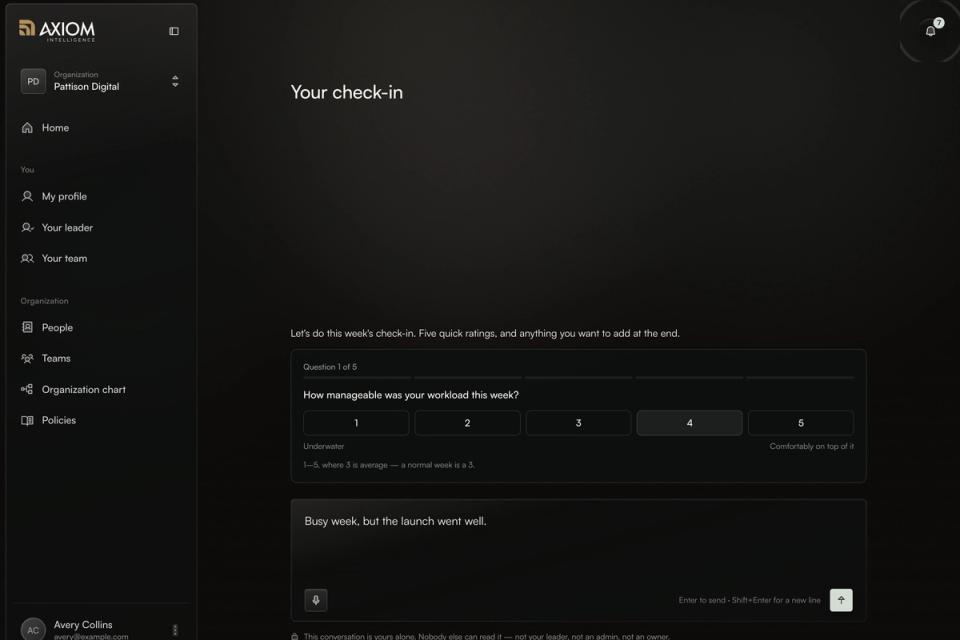
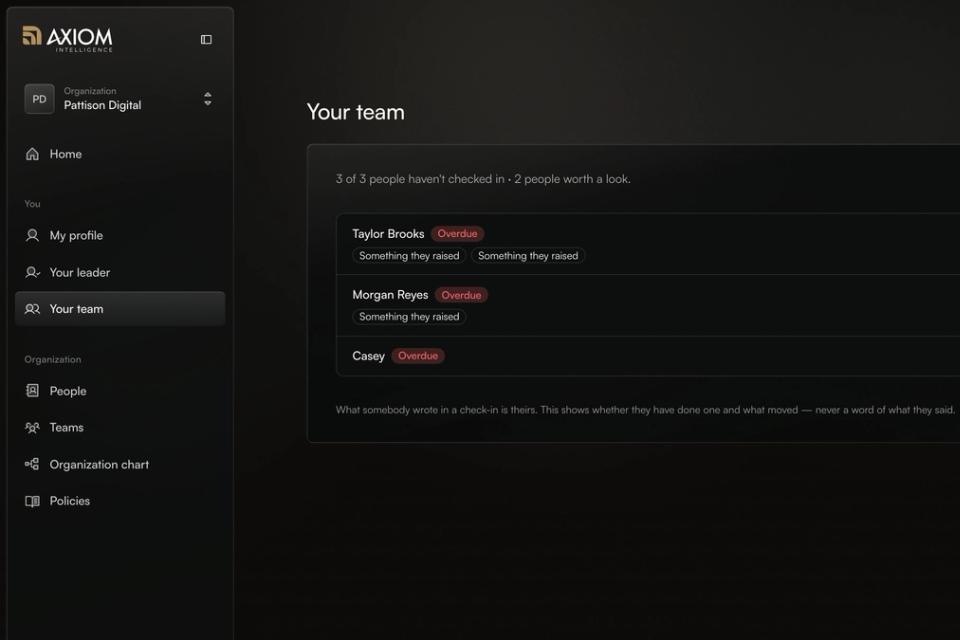
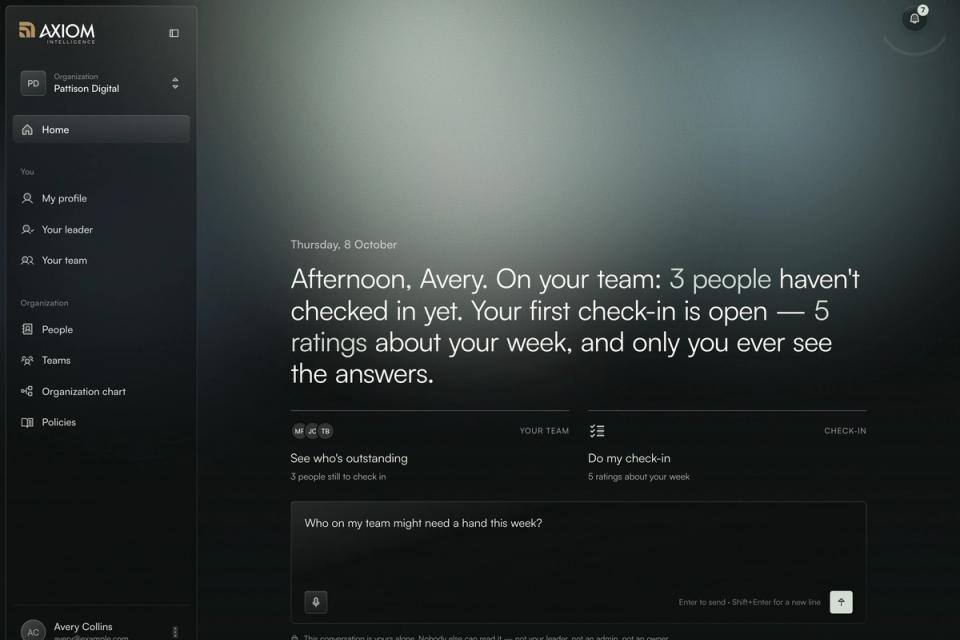
- A coaching tool that reads weekly check-ins and gives managers an early read on energy, direction and roadblocks.
- An assistant that answers accurately from an organization’s own documents.
- A system that reads every support ticket and sales call and reports what keeps coming up.
- A learning platform that adapts explanations to each person’s level.
- A tool that makes a team’s expertise usable without the expert in the room.
None of these was practical until models could read and summarize reliably enough to build on.
What an agent is
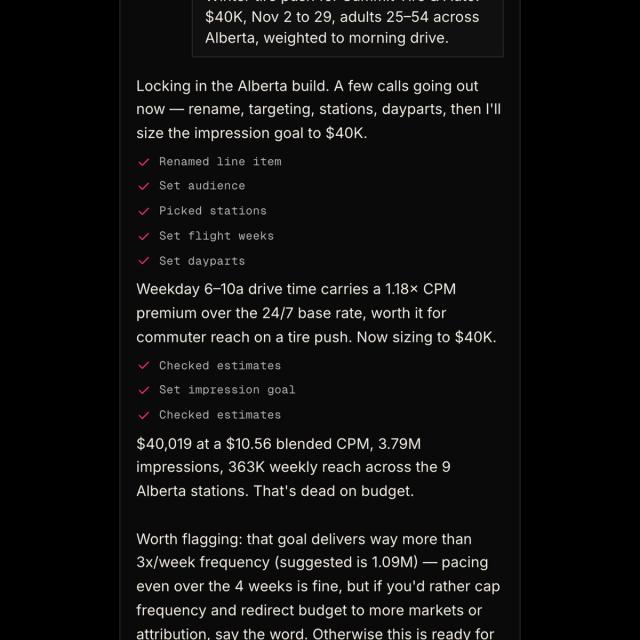
Where a chat answers one question, an agent reads, decides, uses tools and acts: looking something up, updating a record, drafting a document, checking the result, moving on.
Agents are worth building when a task:
- Has many steps that follow a pattern.
- Happens often enough that automating it pays off.
- Follows judgment you can describe, so you can define what good looks like.
Agents don’t pay off for rare, poorly understood or genuinely one-off tasks. Good agent work starts with a well-understood workflow.
Grounded answers
For a product that answers questions, the key decision is where the answers come from. A general model is fluent but unreliable about your organization.
A grounded product answers only from defined sources, a pattern often called retrieval-augmented generation (RAG): it finds the most relevant passages in your content and answers from those alone. Done well, it also routes questions, reranks results and verifies each claim first. When the sources hold no answer, it says so.
Grounding suits support, internal knowledge, policy questions and anywhere a confident wrong answer is costly. The chat on this site answers only from what Lift has published here; Strategy Navigator, our strategy advisor, answers from each client’s own strategy.
Designing for when AI is wrong
Every AI system is sometimes wrong, so we plan for what happens then:
- Clear limits. Agents get only the tools and data they need, with narrow permissions.
- A person in the loop. Where an action is costly or hard to undo, a person reviews or approves it first.
- Visible sources. Answers show where they came from, so people can check them.
- Honest uncertainty. When the system isn’t confident, it says so or hands off to a person.
- Evaluation. Measuring accuracy against real questions and cases, and retesting as models and content change.
Keeping it simple
We keep agents simple: direct calls to the model and your systems, in clear code, with a heavy framework only when the problem needs one. Simpler systems are easier to test, cheaper to run and far easier to fix.
Models improve and prices fall quickly, so we avoid locking a product to one model and keep room to swap in better ones.
Data and privacy
AI-native products often handle sensitive information: what employees say, what customers ask. We decide early what the system can see, where data is processed and stored, how long it’s kept and who owns it, then choose providers that meet your privacy requirements. We’re open about the trade-offs.
Riskiest part first
- Define the job: the workflow or question, and what a good answer or outcome looks like.
- Prototype the AI’s core task early, usually the biggest risk in an AI product, to see whether it does the job reliably.
- Design the experience around it, including what happens when the AI is uncertain.
- Build the evaluation that keeps it honest after launch.