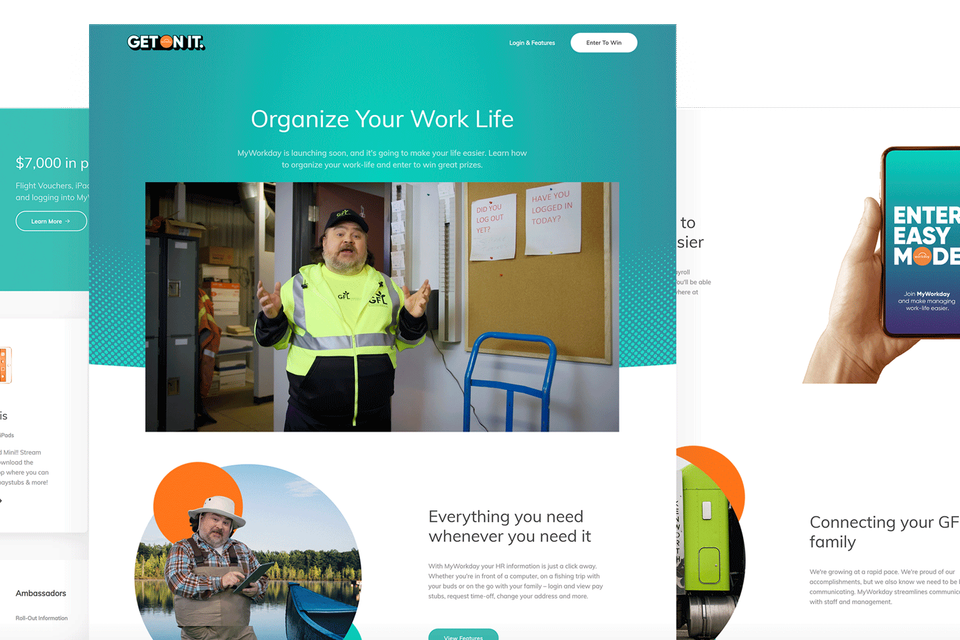
A repeatable onboarding program that beat its 70% target with an 82% login rate.
Read the case study: GFL Environmental


Repeated work, at the scale of a whole organization.
Field crews, fleets, plants and paperwork. We find the repeated work AI can take on, then build the tools that do it.
Industrial and enterprise organizations do the same work across sites, crews, shifts and acquisitions. Many of the people doing it are in the field, the systems behind them were bought at different times for different reasons, and a surprising amount still moves by spreadsheet, email and re-typing.
Work like this suits applied AI: it’s well understood, the volume is high, and every manual step is multiplied across hundreds or thousands of people. The hard part is choosing where to start, then building tools your IT and security teams will sign off on. We also design the software people use every day: for Pattison ID’s Journey platform, we did the UX and UI planning, design and front-end code, with AI used to prototype parts of the interface.

We spend time with the people doing the work, in the field as well as the office, and map where it repeats and stalls. Then we sort the opportunities into what to automate, what to upgrade and what’s newly possible. You come away with a map of where to start and, often, a working tool or two.
We keep your core platforms and build the connections between them, so information is entered once and reaches everyone who needs it. AI can read documents and route requests where that saves someone a step. Reporting then pulls from every system, and agents can watch operations and summarize what changed, so leaders get a short read in place of a pile of exports.
For work that repeats, like onboarding each new acquisition, we design the program behind it: templates, messaging, decision rules and tooling that scale up or down. Each rollout then starts from the last one.
Tools and messages planned for the devices crews carry, written in plain language, working offline where signal drops, and sent through channels front-line workers actually check.




Questions enterprise teams ask
With the work itself. A first phase can be just the audit and one small working tool, so you see the value before committing to more.
Related