The problem it solves
A modern campaign has dozens or hundreds of versions: every social format and display size, several languages, different messages for different audiences, fresh variations to avoid fatigue. By hand, that’s slow and expensive, and small drifts in type, colour and layout add up until the campaign no longer looks like itself.
Teams often respond by limiting the variations or accepting lower quality in the long tail. A pipeline removes that trade-off.
What a pipeline is
A pipeline usually has five parts:
- A creative system. Templates, layout rules, type, colour, imagery and motion guidance, defined precisely enough for a machine to follow.
- Inputs. Copy, images, product data, audience segments, languages, or live data such as scores, weather or prices.
- Generation. Filling templates, resizing and reflowing layouts, or using AI models to produce imagery, copy variations, voice or audio within defined limits.
- Review. Designers and approvers see what’s been produced, catch problems and approve assets before they go out.
- Delivery. Export in the right formats and sizes, and hand off to the platforms or ad servers where they’ll run.
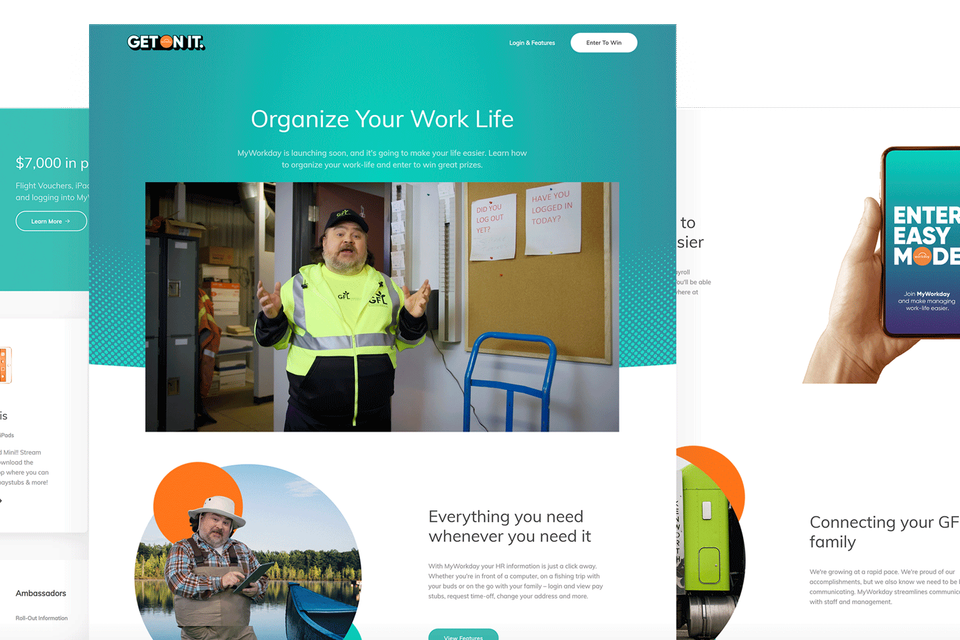
Some pipelines are a simple browser tool where a designer sets parameters and exports graphics. Others run largely on their own, triggered by data and producing assets overnight for review in the morning. During the 2026 World Cup, one of ours produced score-update audio ads overnight, in AI voices modelled, with permission, on real radio hosts.
Where AI fits
AI models make pipelines far more capable. They can:
- Write and adapt copy for different audiences.
- Generate or extend imagery.
- Produce voiceover.
- Translate, with your own people checking the languages they need to.
- Check assets against guidelines.
The creative system sets the boundaries, and prompts and references are structured and tested before anything runs at volume.
Designers stay in charge
Instead of resizing the same ad into forty formats, a designer defines how it adapts, reviews the results and refines the rules until every variation is good. The craft goes into a system every asset inherits.
A pipeline that outlasts the campaign
When a program repeats, like a rollout with every acquisition, a seasonal campaign or an annual event, the pipeline becomes an asset. Each run is faster and more consistent, and the organization stops starting from scratch.
So we often design the system with the first campaign: templates, messaging frameworks, rules for scaling up or down, and the tooling. Later campaigns reuse it.
What makes a pipeline work
- A strong creative system first. A pipeline can only scale what’s been defined.
- Real content in testing. Templates have to survive long headlines, awkward images and translated copy that runs 30% longer.
- Easy review. If checking output is harder than making it, people won’t use the pipeline.
- Clear ownership. Someone maintains the templates and rules as the brand evolves.
- Honest limits. Flagship assets that set the tone still deserve individual attention. Pipelines are for the long tail.
From asset inventory to pipeline
- Inventory every asset the campaign needs, starting from its creative direction.
- Separate what varies from what stays fixed, and design templates and rules around it.
- Prototype with real content early, refining with the creative team.
- Fit review and delivery to how the team already works.
We stay with the pipeline after launch, supporting and developing it as the brand and campaigns change. Your team runs as much of the day-to-day production as it wants.